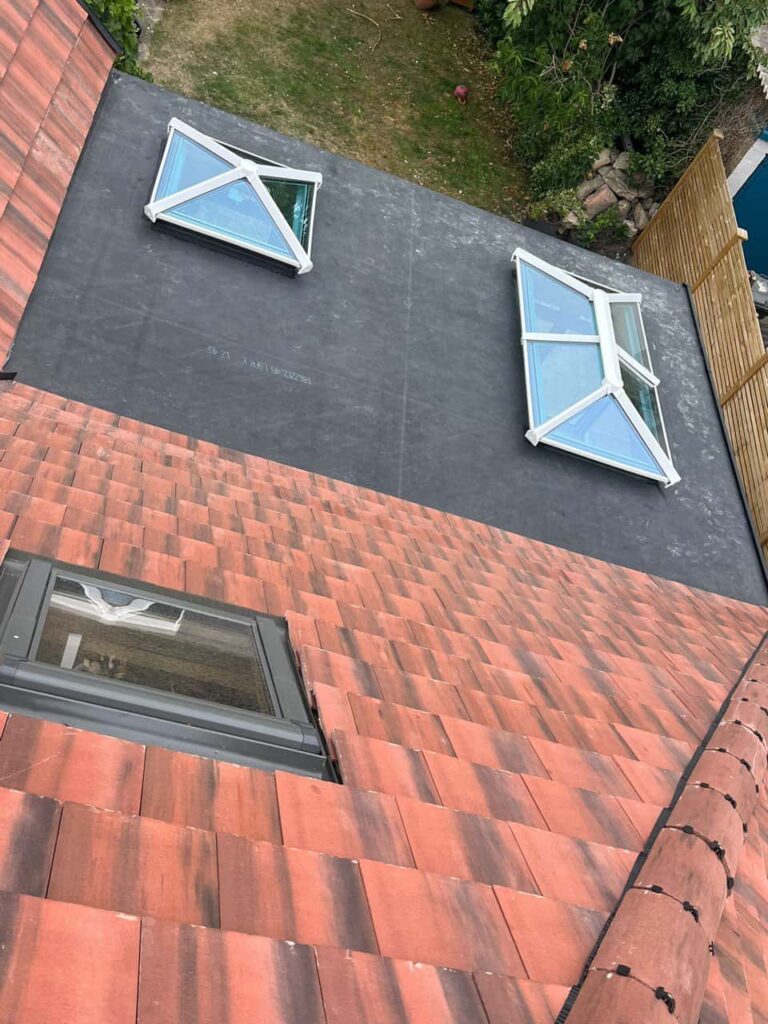
Felt roofs remain a popular choice for garages, extensions, porches and outbuildings throughout Grove and the wider Oxfordshire area. They are durable, practical and cost-effective, but like all roofing systems, they are vulnerable to wear over time. One of the clearest signs that a felt roof is beginning to fail is the appearance of bubbles or blisters on the surface.
Although they may seem minor at first, these raised areas can quickly lead to more serious issues if left unaddressed. Understanding what causes blisters and why they signal roof failure is essential for maintaining a watertight and long-lasting felt roof.
What Bubbles and Blisters Actually Are
Bubbles and blisters form when air or moisture becomes trapped between the layers of the felt membrane. As pressure builds—often due to heat exposure—the trapped pockets expand and create raised areas on the roof surface.
This indicates that the layers of the felt are no longer bonded properly, which compromises both strength and waterproofing.
Common causes include:
- Poor adhesion during original installation
- Moisture trapped within the structure
- Age-related deterioration
- Heat expansion during sunny weather
- Movement in the roof deck beneath the felt
Once the bond has broken, the membrane becomes far more vulnerable to further damage.
Why They Are a Warning Sign of Imminent Failure
While a blister might look harmless, it highlights a deeper issue. Felt roofs rely on tight bonding across all layers to remain fully waterproof. When bubbles appear, those sections are already weakened, and their performance will continue to decline.
Blistered felt roofs are prone to:
- Splitting as the blister expands
- Cracking when the weather cools
- Allowing water to sit around weakened areas
- Tearing during high winds
- Leaks when the membrane finally ruptures
These risks mean that bubbles should never be ignored.
Moisture Is Often the Underlying Problem
Moisture beneath the membrane is one of the most common causes of blistering. It may have come from:
- A small leak elsewhere on the roof
- Condensation trapped during installation
- Failing joints or laps
- Water travelling from adjacent structures
When the sun heats the roof, this moisture turns into vapour and expands, forcing the felt to lift. Over time, this cycle of heating and cooling makes the problem progressively worse.
Heat Accelerates Deterioration
Felt roofs absorb heat quickly, especially on south-facing sections. When temperatures rise, blisters become more pronounced. During colder periods, the membrane contracts, which can cause sharp creases, cracks and splits.
This ongoing movement weakens the felt and significantly reduces its life expectancy.
Failure Often Spreads Beyond the Visible Blister
A blister on the surface is usually only part of the problem. The surrounding areas may already be losing adhesion, even if they have not risen visibly yet. This is why prompt action is essential; delaying repairs often results in more widespread and costly deterioration.
Early Intervention Protects the Roof Structure
Responding promptly to bubbles and blisters can prevent further damage, protect the roof deck and extend the life of the entire covering. A professional inspection can determine whether a localised repair is suitable or whether the felt has deteriorated to the point where a full replacement would provide better long-term protection.
Conclusion
Bubbles and blisters on a felt roof are clear warnings that the membrane is beginning to fail. They indicate trapped air or moisture, loss of adhesion and vulnerability to leaks, cracking and future failure. Acting quickly helps prevent more extensive problems and keeps your property protected.
If you’ve noticed bubbles or blisters on your felt roof in Grove, LJ Roofing Grove can provide a professional assessment and clear guidance on the best solution. Contact us today to arrange a visit and ensure your roof remains secure and watertight.
Call us on: 01235 617 998
Click here to find out more about LJ Roofing Grove
Click here to complete our contact form and see how we can help with your roofing needs.